
WILLIAMS, Grace Mary
The Big List is a free resource, but it's not free to build. Support the Donne Foundation and help us keep it growing.
Footer


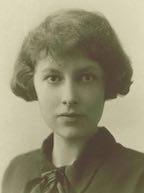
Grace Mary Williams (1906-1977) was a Welsh composer, generally regarded as Wales's most notable female composer, and the first British woman to score a feature film.
Williams' most enduringly popular work is Penillion, written for the National Youth Orchestra of Wales in 1955. She revisited some of the same ideas in her Trumpet Concerto of 1963. Despite the tradition of choral music in Wales, Williams' portfolio of compositions were largely orchestral or instrumental pieces. Ballads for Orchestra of 1968, written for the National Eisteddfod, held that year in her home town, has all the colour and swagger of a mediaeval court.
Outstanding amongst her vocal works are her setting of the Latin hymn, Ave Maris Stella, for unaccompanied SATB (1973), and Six Poems by Gerard Manley Hopkins, for contralto and string sextet (1958). The cycle is book-ended by two of Hopkins' best-known poems, Pied Beauty and Windhover, her music perfectly matching the rhythmic subtlety of the texts. These are amongst her most beautiful pieces, the soft melodic and harmonic undulations in Ave Maris Stella (Hail, Star of the Sea) suggesting as so often in her music the swelling of the ever-present sea. Welsh-language settings include Saunders Lewis's carol Rhosyn Duw, for SATB, piano and viola (1955), which she later incorporated into her large-scale choral work, Missa Cambrensis (1971).
Her last completed works (1975) were settings of Kipling and Beddoes for the unusual combination of SATB, harp and two horns. The last music she wrote is actually in her Second Symphony, originally composed in 1956, and substantially revised in 1975.
The Big List is a free resource, but it's not free to build. Support the Donne Foundation and help us keep it growing.