
WESTENHOLZ, Sophia
The Big List is a free resource, but it's not free to build. Support the Donne Foundation and help us keep it growing.
Footer


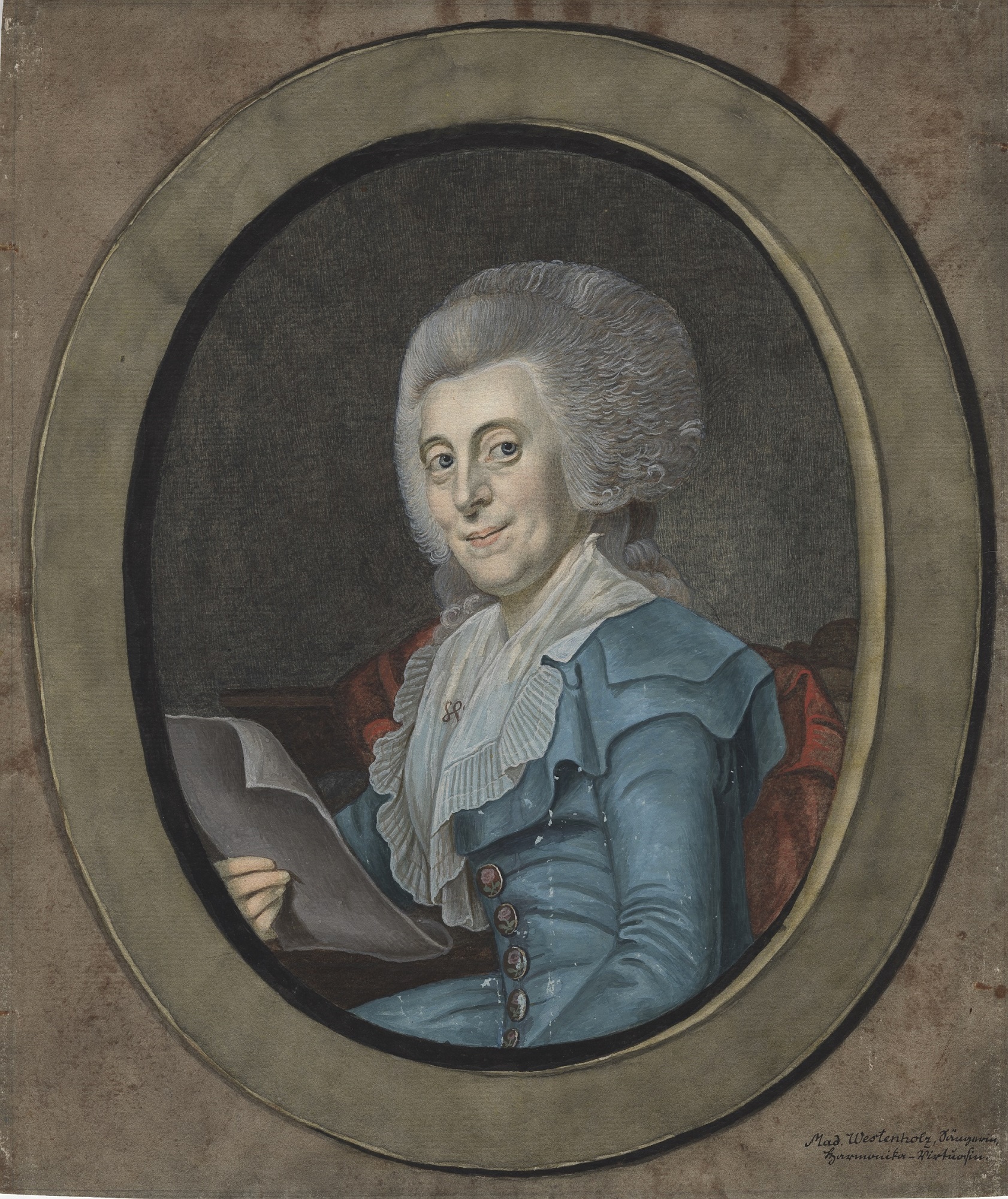
Sophia Maria Westenholz (née Elenore Sophia Maria Fritscher; 10 July 1759 - 4 October 1838) was a German composer, musician, singer and music educator. Born in Neubrandenburg, she was raised in a privileged family and spent most of her life in the courts of Schwerin and Ludwigslust, capitals of the Duchy of Mecklenburg-Schwerin. At the behest of Duke Ludwig, she studied piano and singing with Konzertmeister Johann Wilhelm Hertel in Schwerin beginning at age ten. By the time she was sixteen, she was employed as a singer in the Mecklenburg-Schwerin court chapel at Ludwigslust.
By the 1780s, Westenholz received great acclaim in Berlin, Leipzig, Ludwigslust and Rostock, amassing a following including composer Ernst Wilhelm Wolf and Carl Friedrich Cramer. Wolf is quoted as saying “Mrs. Westenholz's manner is that of the great Bach in Hamburg.” In a review of his six sonatas, which Wolf had dedicated to Sophie Westenholz, Cramer also praised the balance in the musical expression of her playing.
In addition to her reputation as a pianist, she also became known for performing as a glass harmonica player in various concerts. After 1800, she began focusing on cultivating compositions, with several of her works appearing in print by 1806. She was described by Johann Friedrich Reichardt as being 'one of the leading musicians of Europe’.
The Big List is a free resource, but it's not free to build. Support the Donne Foundation and help us keep it growing.