
SZYMANOWSKA, Maria Agata
The Big List is a free resource, but it's not free to build. Support the Donne Foundation and help us keep it growing.
Footer


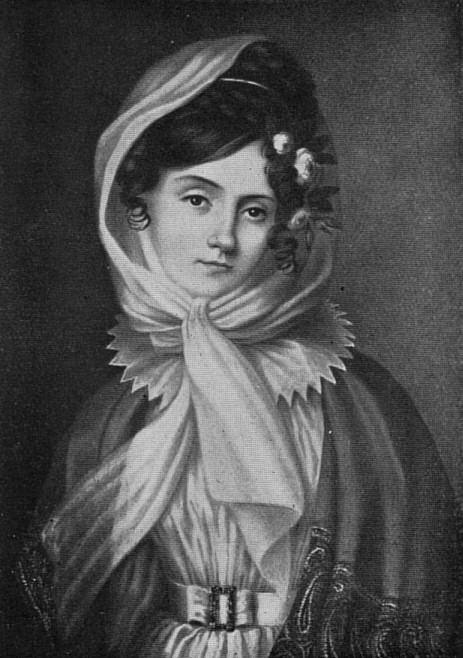
Born Wolowska, composer and ne of the first professional virtuoso pianists of the 19th century. She toured extensively throughout Europe, especially in the 1820s, before settling permanently in Saint Petersburg. In the Russian imperial capital, she composed for the court, gave concerts, taught music, and ran an influential salon. The salons in 18th-century France were intellectual gatherings held at home by educated women. Her compositions—largely piano pieces, songs, and other small chamber works, as well as the first piano concert etudes and nocturnes in Poland—typify the stile brillant of the era preceding Frédéric Chopin. She was the mother of Celina Szymanowska, who married the Polish Romantic poet Adam Mickiewicz.
Szymanowska left a mark on the cultural life of several countries, but was widely acclaimed for her performing capabilities, not for her music. Called “exceptional among women” (by F. Malewski, cf. Belza 1987: 15), “the charming Allmighty of Sound” (by J.W. Goethe who wrote for her Aussohnung, cf. Syga and Szenic 1960, Swartz 1984) and “the Queen of tones” (by A. Mickiewicz, cf. Iwanejko 1959: 60), Szymanowska was praised for the brillance and expressive quality of her tone: she made the piano speak and sing (Mochnacki 1827/1955).
The Big List is a free resource, but it's not free to build. Support the Donne Foundation and help us keep it growing.