
MARIMON, Maria Teresa Pelegri I
The Big List is a free resource, but it's not free to build. Support the Donne Foundation and help us keep it growing.
Footer


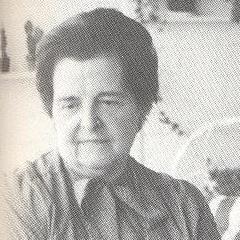
María Teresa Pelegrí i Marimón was a distinguished Catalan composer born in Barcelona. Though she received piano and musical instruction in her youth, domestic obligations delayed her professional pursuit of composition. In her forties, she made the remarkable decision to resume intensive musical training, studying counterpoint and fugue with the composer Josep Poch and subsequently mastering modern composition and twelve-tone serial techniques under the renowned Catalan pedagogue Carles Guinovart.
Pelegrí developed a sophisticated, modernist compositional voice characterized by serial and atonal frameworks, refined polyphonic textures, and a strong sense of expressive drama. Her catalog is extensive and varied, comprising solo instrumental works (notably for piano and organ), chamber music (including multiple string quartets and woodwind ensembles), orchestral scores, and choral pieces. She was among the few Spanish women composers of her generation to compose large-scale staged works, writing two notable operas: the chamber opera "Herodes i Mariamne" and "L’elegit".
Emerging in the post-Franco era of Spanish contemporary music, Pelegrí achieved significant critical recognition within Iberian avant-garde circles. Her works were frequently premiered and broadcast across Spain, championed by prominent ensembles such as the Barcelona Symphony Orchestra (OBC) and contemporary music festivals. Her legacy as a trailblazing figure in 20th-century Catalan art music is permanently preserved at the National Library of Catalonia (Biblioteca de Catalunya), where her manuscripts and personal archive are housed.
The Big List is a free resource, but it's not free to build. Support the Donne Foundation and help us keep it growing.