
BLANGINI, Felicita
The Big List is a free resource, but it's not free to build. Support the Donne Foundation and help us keep it growing.
Footer


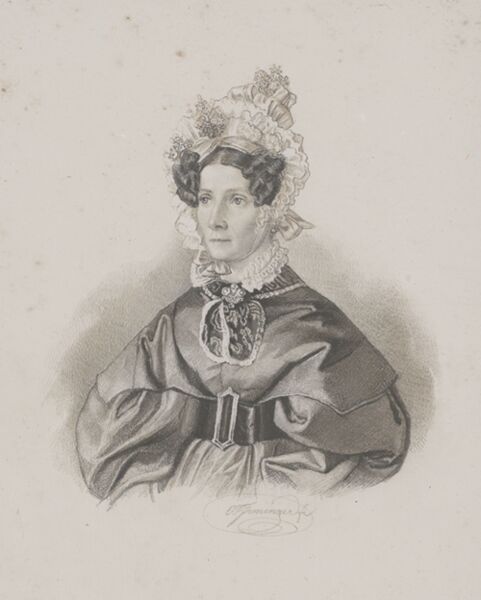
Felicita Blangini, later known as Felicita Blangini-Klenze, was an accomplished Italian violinist, singer, vocal instructor, and composer. While often historically overshadowed by her younger brother, the famous opera composer and singing master Felice Blangini, Felicita was a highly respected musician in her own right, building a career across the major cultural hubs of Europe. Born into a wealthy family in Turin, Italy, in 1780, Felicita displayed early musical talent. Her training was exceptional, guided by some of the most prominent masters of the late 18th century: voice (she studied under the celebrated Italian castrato soprano and composer Girolamo Crescentini), violin (she received lessons from the legendary Gaetano Pugnani in Turin, and later refined her craft in Paris under Giuseppe Puppo and Alexandre Boucher) and composition (she was trained in musical composition by the Italian composer and cellist Camillo Barni). Driven out of Italy by the Napoleonic Wars, her family sought refuge in France in the late 1790s.
Around 1800 in Paris, Felicita became the violist of one of the first historically documented all-female string quartets. The group included Agathe-Victoire Ladurner (first violin), Clarisse Larcher (second violin), and Marie-Thérèse Pain (cello). They regularly played in high-society salon networks and charity concerts.By 1805, Felicita had moved to Germany, where she was appointed as a violinist and maîtresse de chant (singing teacher) to the Electress of Bavaria. Utilizing her influence at court, she successfully introduced her brother Felice to the Munich court, securing him a position as Kapellmeister. Felicita Blangini’s surviving works include chamber music and vocal pieces. Her music is occasionally revived today by ensembles specializing in historical women composers, such as Austria's Lombardini Quartet, keeping her legacy as an early 19th-century pioneer alive.
The Big List is a free resource, but it's not free to build. Support the Donne Foundation and help us keep it growing.