
BERNARD-GJERTZ, Jacobine
The Big List is a free resource, but it's not free to build. Support the Donne Foundation and help us keep it growing.
Footer


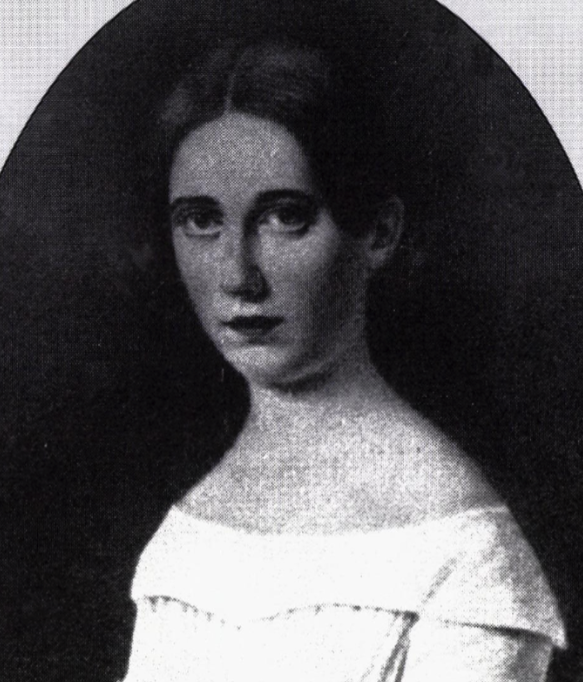
Jacobine Bernard-Gjertz (born Jacobine Gjertz) was a pioneering Norwegian pianist, composer, and writer. She is historically significant for organizing and performing in the very first women's concert and composition showcase in Norway's capital. Born in Christiania (now Oslo), Norway, she was the daughter of a city clerk. Showing immense early talent for piano and music theory, she applied for a travel stipend in 1839. Her application was backed by glowing recommendations from two of Denmark’s most prominent composers, Christopher Ernst Friedrich Weyse and Johan Peter Emilius Hartmann, who highly praised her musicianship. By 1840, she was successfully performing concerts in Copenhagen and Stockholm. In 1841, she moved to France to study at the prestigious Paris Conservatoire under the celebrated German piano virtuoso Friedrich Kalkbrenner.
In 1843, seeking independence from what she called a "stupid world... full of prejudice," she traveled to the United States. She performed well-received concerts in New York City and Philadelphia. While in the U.S., she met and married a French merchant named Gabriel Bernard in 1845. Following her marriage, she converted to Catholicism and rebaptized herself as Marie-Gabrielle Bernard-Gjertz. The couple spent time in France before returning to Christiania in 1851. It was during this stay that she made history by hosting a joint concert with singer Emma Dahl. This event marked the first composition concert and the first all-women's concert ever held in Christiania, where Bernard-Gjertz performed her own original piano works. The family eventually relocated back to Paris via Copenhagen and Brussels. After her husband passed away in 1857, she was left as a widow with four children to support. To make a living, she expanded her career beyond performing. She began writing music, art, and literary critiques for various publications. In her final years, she became an established author, writing several books and articles addressing topics that ranged from religion and politics to the systemic oppression of women.
The Big List is a free resource, but it's not free to build. Support the Donne Foundation and help us keep it growing.